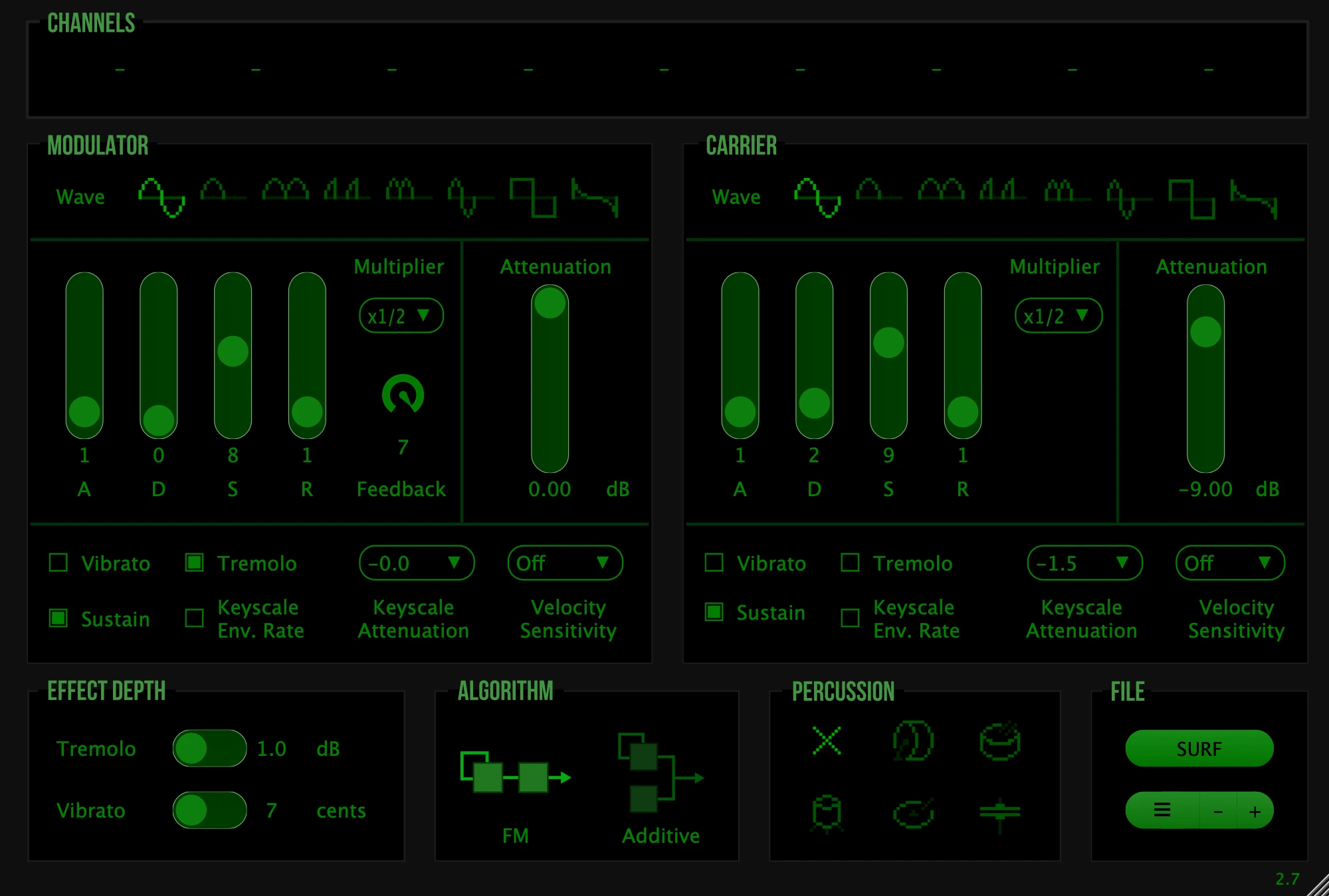
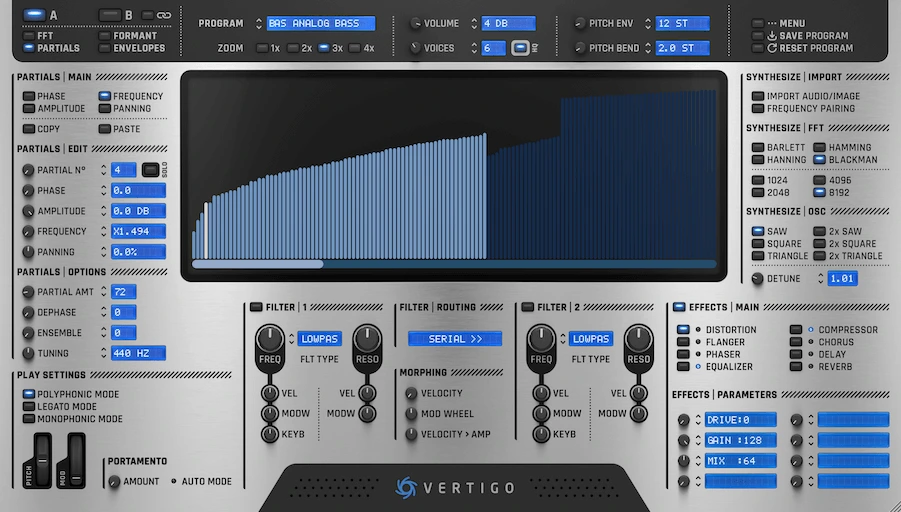
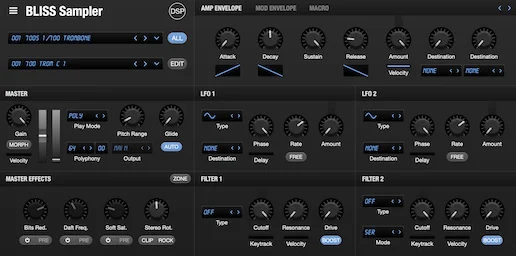
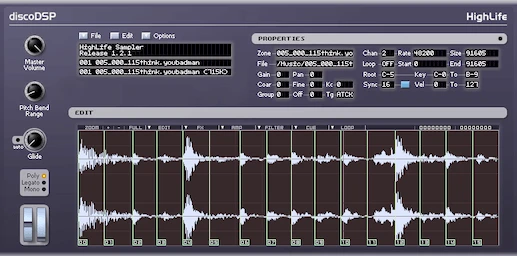
Retromulator runs eleven hardware cores at chip level. The DSP-based synths execute their original ROM firmware on a cycle-accurate Motorola DSP 56300. The DX7 runs its actual Hitachi HD6303R sub-CPU and Yamaha EGS/OPS chip set. The Wurlitzer 200A is a physical model (OpenWurli). The OPL3 runs Nuked OPL3 cycle-accurate FM. The C64 SID runs reSID 6581/8580 with GoatTracker bank loading. The Akai S1000 runs on the SFZero sample engine. The plugin loads firmware and sample data from your own hardware — not approximations of the sound, the actual code running.

Most synth emulations approximate the front panel — the same controls, a different DSP. Retromulator runs the actual firmware. The DSP56300-based synths execute the same machine code their hardware does. The DX7 emulates the HD6303R sub-CPU and the YM21280/YM21290 EGS/OPS chip set so the original ROM voice data plays back unmodified. The Wurlitzer is a per-voice physical model with tine, pickup, and tone-bar physics. The OPL3 runs Nuked OPL3 cycle-accurate FM with SBI instrument loading. The C64 SID runs reSID with the 8580 chip model and GoatTracker .sng/.ins bank loading. The Akai S1000 runs on SFZero 3.0 with 8-point sinc interpolation, supporting SF2, SFZ, ZBP, ZBB.
Drop ROM firmware from your own hardware (or sample banks from your library) into the designated folder. The plugin loads them on the next launch.
Built on Gearmulator by the dsp56300 team.

16-bit hardware sampler whose converters and filters shaped late-80s and 90s production. The core runs on SFZero 3.0 (MIT) with 8-point sinc interpolation, extended SFZ/SF2 opcode support, and discoDSP Bliss formats (.zbp/.zbb). Loads Akai ISO/BIN/CUE disk images directly, with folder browsing, auto-slice drum mapping, global retune via CC20, and full CC routing (mod wheel, volume, expression, pan, sustain, pitch bend).

1997-2002 DSP-based virtual analog. The A is the original aggressive Virus character; the B and C add filter modes, polyphony, and the saturation/distortion stages. The chip-level emulation runs the same firmware, so factory and user banks play back correctly.

2005 expansion of the Virus line — more polyphony, more parts, deeper mod matrix. Higher CPU than the A/B/C cores; useful when you need the TI-specific patches (HyperSaw, three oscillators with sub, expanded effects).

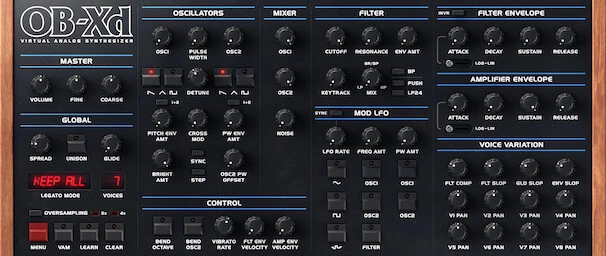
The 2X revision of the Nord Lead 2 — dual DSP56300 for higher polyphony and unison. Direct firmware execution, so 2X SysEx patches load and behave like they do on the hardware.

MOS 6581/8580 — the chip behind C64 chiptune. Runs reSID by Dag Lem (GPLv2) with the 8580 model and high-quality RESAMPLE sampling. 3-voice polyphony with oldest-voice stealing, full macro playback engine (wavetable, pulsetable, filtertable, speedtable) at 50 Hz PAL frame rate, and live MIDI control of cutoff, resonance, pulse width, vibrato, and pitch bend. Loads GoatTracker .sng banks and standalone .ins instruments (GTS3/4/5, GTI3/4/5).

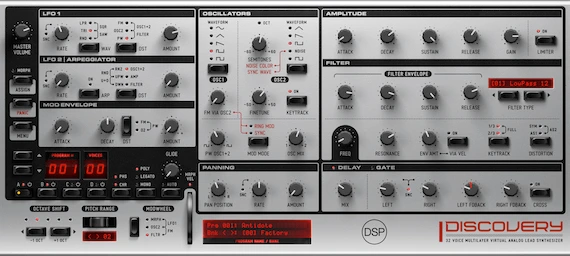
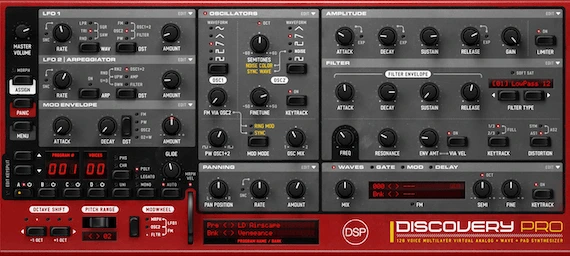
The original supersaw — seven detuned saws stacked on one oscillator. Beyond that: full VA architecture, motion-control ribbon, and the trance-defining filter and amp character.

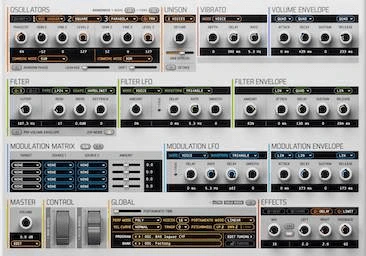
Wavetable synthesizer with three filters per voice and the Waldorf modulation matrix. Loads original microQ patches and wavetables — the digital-analog hybrid character without resampled approximations.

PPG-lineage wavetable synthesis with analog-modeled filters. Where you go for sweeping wavetable scans against resonant filters.

Six-operator FM, 1983. Emulated at the chip level via VDX7 — Hitachi HD6303R sub-CPU, Yamaha YM21280 EGS, YM21290 OPS — so original ROM voice data plays unmodified. The actual DX7 sound, not an FM-style approximation.

Electric piano core based on OpenWurli — a per-voice physical model of the tine, pickup, and tone-bar assembly, ported from ~3,000 lines of Rust to C++ for this plugin. Models the instrument rather than sampling it, so velocity and sustain interact like the real thing.

YMF262 FM chip — the sound of early-90s PC gaming and Sound Blaster. Runs Nuked OPL3 v1.8 (Nuke.YKT), cycle-accurate. Loads SBI instrument files with folder-based banks and zip import.
The DSP-based hardware cores require the original ROM firmware to operate. You must own the original hardware. Firmware can be obtained directly from the manufacturer using the links provided below.
The Akai S1000 sampler loads sample banks directly with no ROM required. Use the in-plugin browse dialog to load .bin, .mid, or .zip files — ZIP archives are extracted automatically with multi-synth detection, saving all recognised firmware in one pass. Assembled binaries are written to the ROM folder and source dumps deleted for instant loading on subsequent launches.
Required ROM file per hardware core (filename is not checked — any file of the correct size and content is accepted):
| Hardware Core | ROM File | Size | Notes |
|---|---|---|---|
| Akai S1000 | — | — | No ROM required — loads SF2, SFZ, ZBP, ZBB sample banks and Akai ISO/BIN/CUE disk images directly |
| Access Virus A, B & C | virus_c.bin |
512 KB | — |
| Access Virus TI | firmware.bin |
6–9 MB | Firmware included with the installer, requires agreement to Access Music TOS |
| Clavia Nord Lead 2X | nord_lead_2x.bin |
512 KB | — |
| Commodore 64 SID | — | — | No ROM required — loads GoatTracker .sng banks and .ins instruments |
| Roland JP-8000 | jp8000.bin |
512 KB | Can be assembled automatically from 8 original firmware MIDI dump files |
| Waldorf microQ | micro_q.bin |
512 KB | Can be assembled automatically from the original firmware MIDI dump |
| Waldorf Microwave XT | xt.bin |
256 KB | Can be assembled automatically from two 128 KB IC dump files |
| Wurlitzer 200A | — | — | No ROM required — physical model with built-in parameters |
| Yamaha DX7 | dx7.bin |
16 KB + 32 KB | 16 KB firmware ROM + 32 KB factory voice data |
| Yamaha OPL3 | — | — | No ROM required — loads SBI instrument files with folder-based bank browsing |
Firmware files should be placed in the designated folder:
Windows: Documents\discoDSP\Retromulator\
macOS: ~/Library/Application Support/discoDSP/Retromulator/
Linux: ~/Documents/discoDSP/Retromulator/
Licensing
Retromulator is built on Gearmulator by the dsp56300 team under a GPLv3 license. Purchasing a license supports ongoing development and entitles you to priority technical support.
The GNU General Public License v3 explicitly permits anyone to use, modify, distribute, and sell GPL-licensed software — the only requirement is that derivative works preserve the same freedoms and make source code available. Retromulator's full source code is published at github.com/reales/retromulator.
Retromulator is an independent project with no affiliation, endorsement, or sponsorship between discoDSP and the dsp56300 team (Gearmulator), or any of the synthesizer and hardware brands featured in the product, including Yamaha, Clavia, Access, Roland, Waldorf, Akai, Wurlitzer, and Commodore.
Open Source
Both Retromulator and Gearmulator incorporate the following third-party open-source components:
discoDSP contributed the following ports and improvements:
Full source code: github.com/reales/retromulator
Supported Platforms
ProTools AAX. Standalone Application: No additional software required.
Apple Audio Unit. Steinberg VST3.




System Requirements
 Windows 10+. IntelIntel processors with AVX2 support:
 10.14+. Apple Silicon or IntelMacBook Pro: Late 2013+